

What’s got a silky coat, an endless capacity to delight, and turned out to be a little bit larger than expected? You probably think we’re talking about Digby, The Biggest Dog In The World (again). But you’d be wrong. The answer to our splendid riddle is actually Lance Turner’s polytunnel.
In fairness, the home of Lance’s tomato seed-breeding operations does have a lot in common with that surprisingly sizeable, screen-stuffing sheepdog. As with dear, dear Digby, the unexpected enormity of Lance’s capacity to grow has reshaped his life.
And it’s not just Lance’s own life that has been changed by his polytunnel. In a small way the inadvertently outsized growing space has affected the lives of those who’ve gone on to collaborate with Lance, those who’ve helped to develop the fruits, and those who’ve bought seeds from his company – Tomato Revolution. It all began with Lance’s slightly errant purchase.
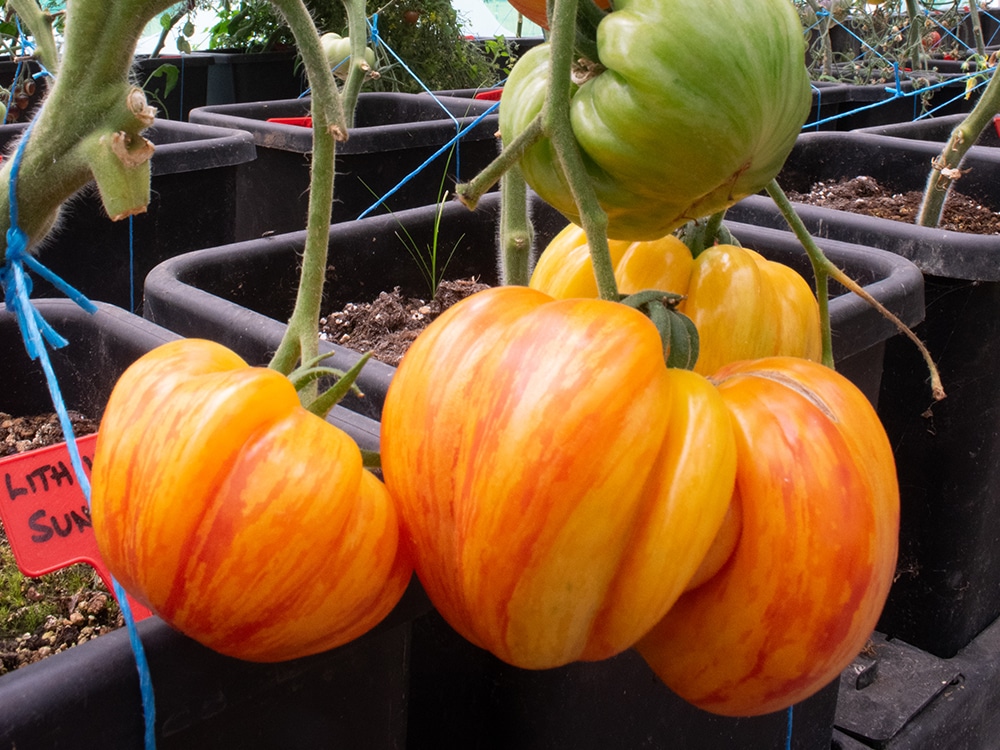
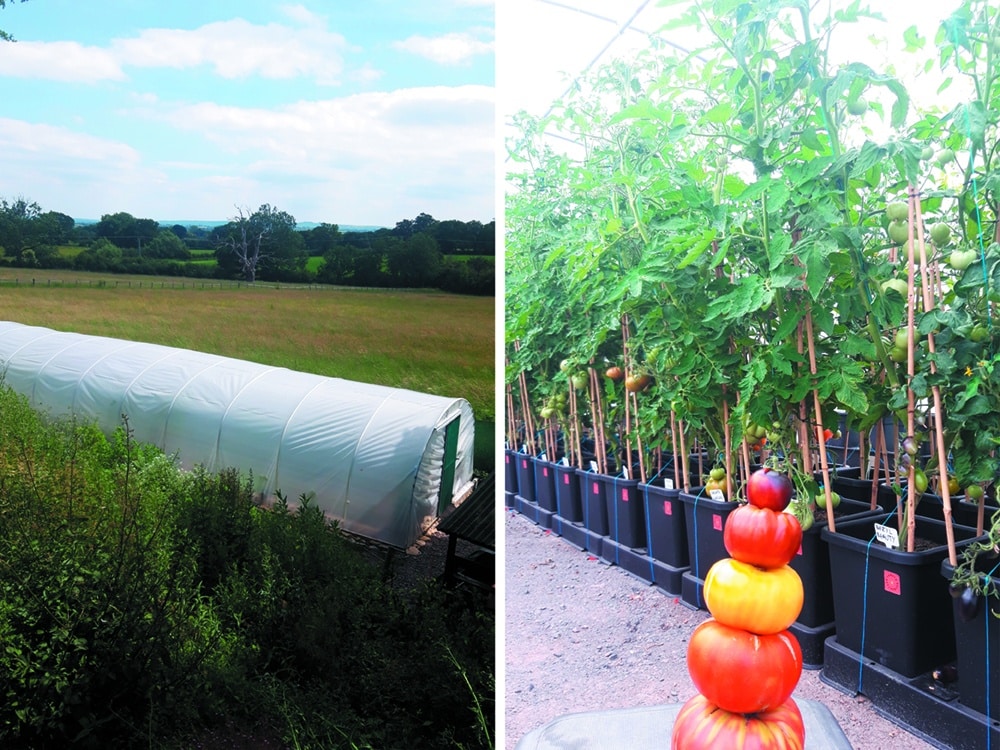
‘We basically got into growing tomatoes by accident. We bought an old polytunnel frame from a farmer, cleared some land at the back of our house, realised the polytunnel was 32ft, cleared some MORE land at the back of our house, started growing tomatoes, and over the last 20 years became quite obsessed.
Indeed, 32ft is a bit big for a first foray into semi-indoor growing. But once Lance had bought his polytunnel, the die was cast. Space abhors a vacuum, and so the poly just ‘had’ to be filled. It was an incredible opportunity to develop a vast range of tomatoes, many of which are totally unique.
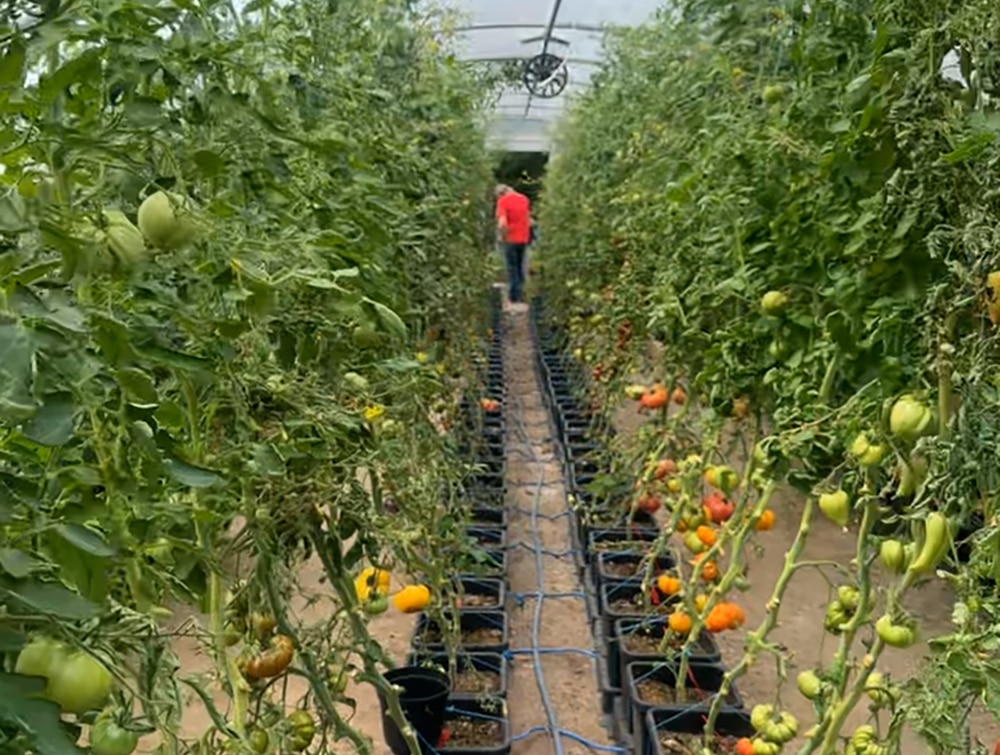
Today, in an even bigger, 54ft tunnel, Lance grows around 120 different varieties spanning every conceivable size, shape, and flavour profile. He’s learnt a great deal in his two decades of cultivation, and was kind enough to impart a tip or two on our recent visit to his AutoPot-equipped Wiltshire base.
Space Base
As you can imagine, Lance knows a fair bit about the urge to fill a space. It’s an urge that few growers can resist – regardless of the area at their disposal. All the same, experience has taught Lance to be very mindful of overcrowding.
‘The best tip for growing tomatoes in a greenhouse is not to put too many plants in. The temptation is to put loads in – which many people do when they start out’. If you’re curious as to how many plants you should attempt in a given space, check out our Shop By Floorspace or Shop By Greenhouse pages – both of which give an idea of healthy distribution.
Decisions relating to plant count and spacing will also involve the varieties grown. Which, as if by magic, brings us onto the subject of varieties.
Varieties And Grow Space
When it comes to spacing, you obviously need to consider how big your plants of choice will be. With tomatoes, this can vary considerably. Many varieties are capable of achieving 8ft or more if given their head.
Don’t let this put you off, though. If you’re short on growing spac,e there are some stunningly flavoursome, incredibly fruitful small varieties available, right the way down to cold frame-suited dwarf tomatoes. Grow something that suits your space. It’ll be a far more enjoyable and productive pursuit that way.
It’s not only spacing that you need to consider when selecting a variety, either. As Lance says, ‘another tip would be to choose the right variety for the environment that you’re growing in. If you’re growing outdoors, choose an early ripening variety. You can choose later ripening varieties if you’re growing indoors.
Actually Having Fun
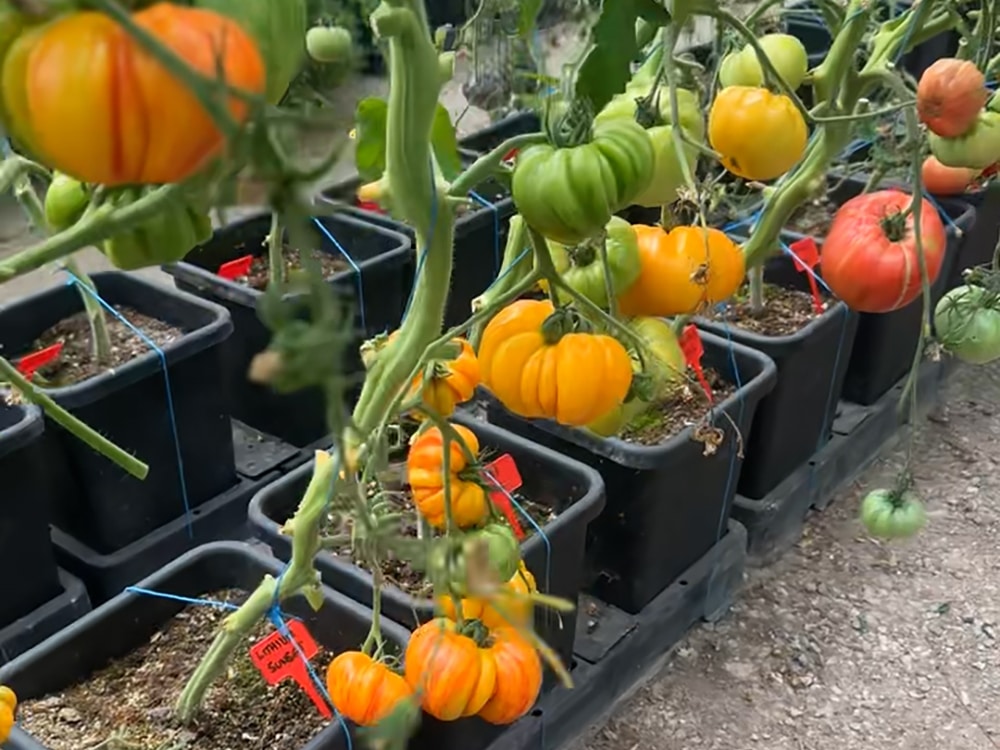
For sure, growing is more enjoyable when it goes right. But it should be about having fun, experimenting, and getting adventurous with varieties, too. Given that he has over 120 varieties under cultivation, it should come as no surprise that Lance is a major proponent of choice and enjoyment when it comes to tomatoes.
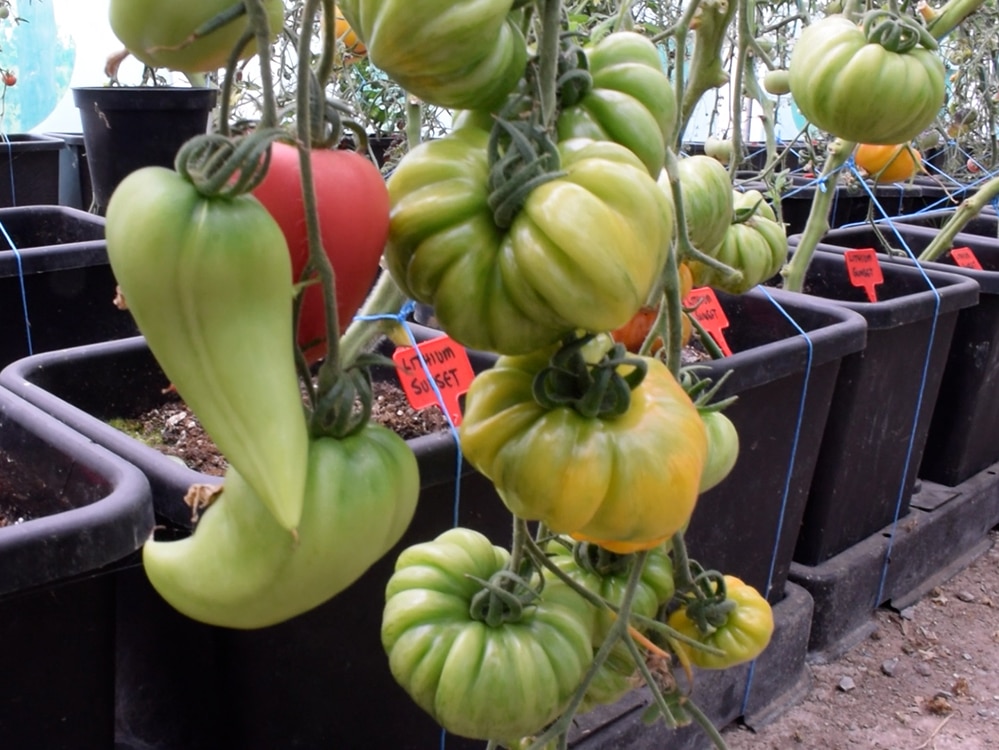
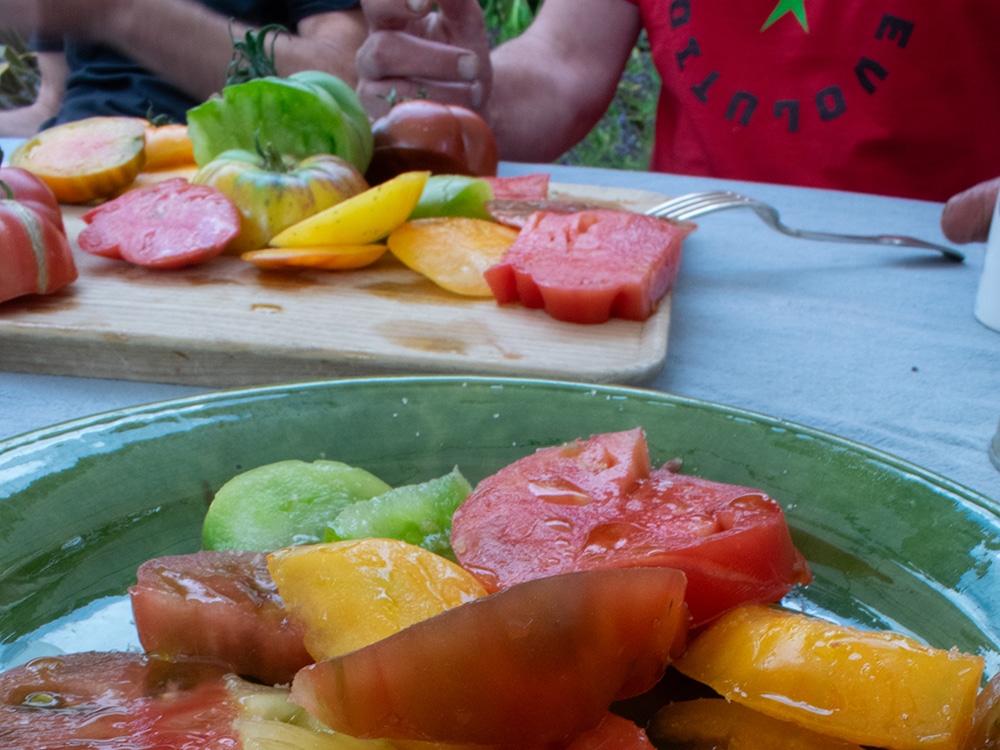
There’s only really one constant value that applies to all of the varieties that Lance grows. No matter whether the fruits are big or small, conventionally-shaped or quirky, red, yellow, green, orange, or anthro-purple in colour, they must have an intense flavour profile. So, where should you start when choosing? Lance’s first tip is not to be too easily led by what you see.
‘Many people buy tomatoes with their eyes, and they look for the prettiest ones… However, often the ones that don’t look that interesting (in here) are the best-tasting ones. My favourites would include Green Giant, Lillains Yellow Heirloom, Rosella Purple, and Caseys Pure Yellow.’
Nothing Vented, Nothing Gained
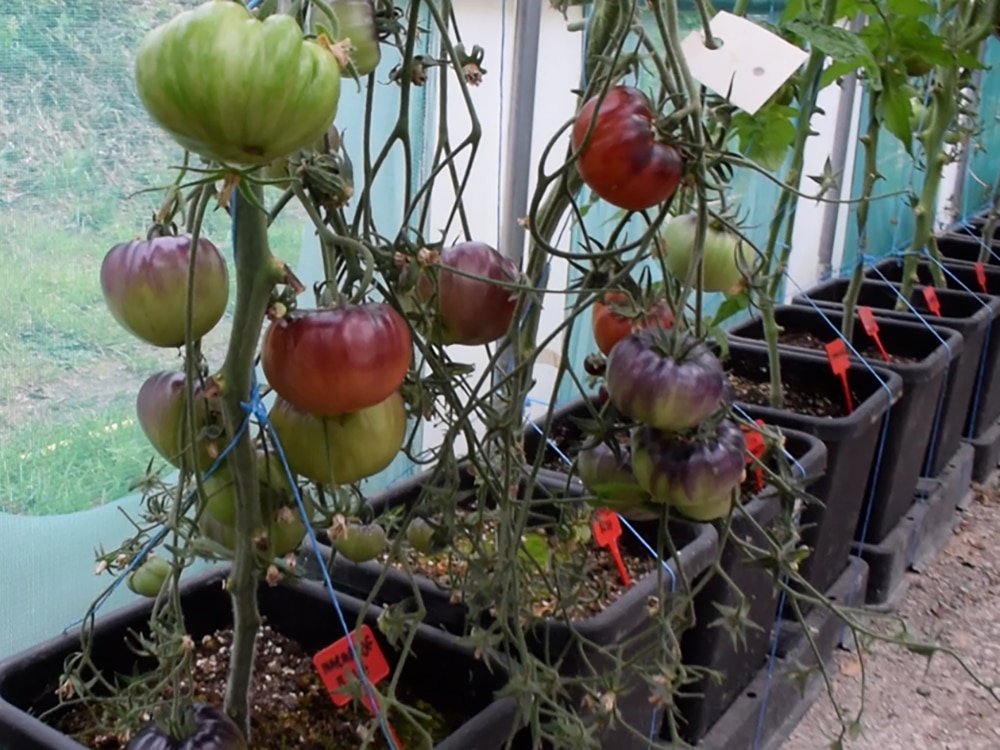
We’ve talked to Lance about the relationship between ventilation and healthy, productive growth before. He was just as emphatic on the subject during our recent visit. As he rightly points out, ‘proper ventilation is essential when growing indoors.’ Yes, you do need humidity, too. But you shouldn’t pursue humidity at the expense of ventilation. The two aren’t mutually exclusive.
Plants grow naturally outdoors where there is constant ventilation, regardless of how high or low the humidity may be. Indoors, you need ventilation to introduce a fresh supply of CO2, oxygen and to keep air moving. The necessity of the gases is obvious. But air movement is vital too, in that it blows away stagnant pockets and hotspots that can otherwise damage your plants.
Lance’s insights and theories are a whole lot more extensive, subtle, and interesting than ‘ventilation = good’. There are pros, cons, and opportunities to maximise growth by carefully timing your ventilation. You can find out more about the intricacies in his blog and in a previous edition of our newsletter here.
Prudent To Prune?
Another subject that we touched upon during our visit was how to combine pruning and ventilation for the best possible results. Essentially, getting fresh air indoors is only half the battle. Once it’s there, it has to have access to the right areas of a plant. And that’s where pruning comes in.
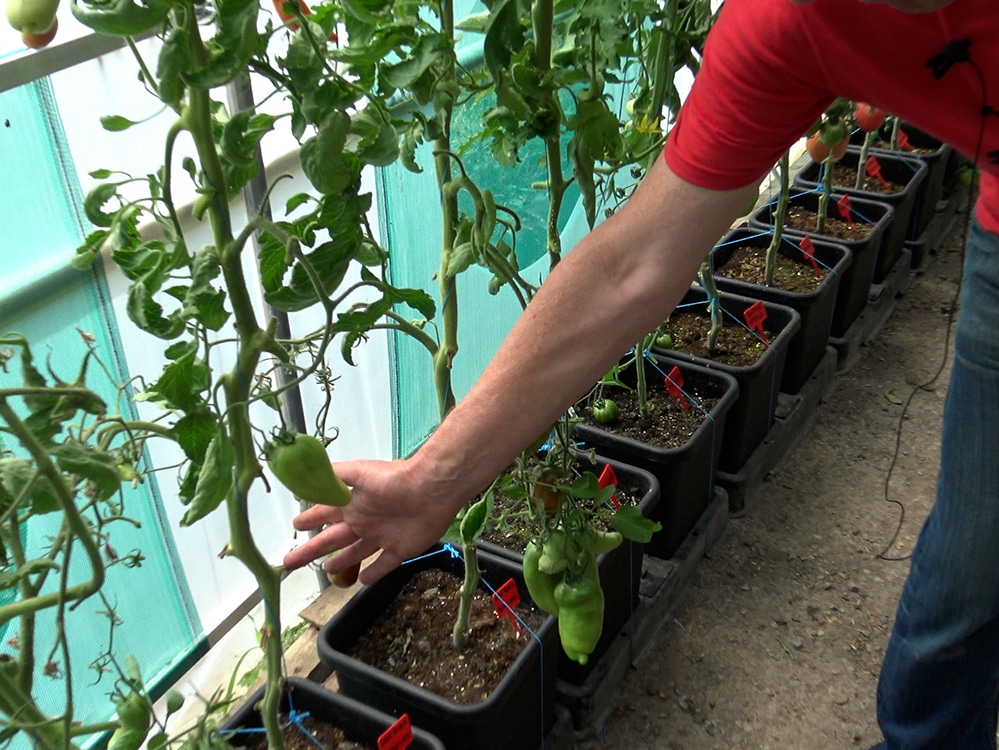
Removing non-essential foliage from the lower reaches of your plants can really help when it comes to indoor growing. Pruning allows the airflow in your growing space to blow through areas that might otherwise harbour fetid air, stagnant growth, and diseases.
Pruning can also help to redirect plant hormones towards productive growth and fruit setting. For these reasons, Lance recommends that you routinely ‘prune your plants up until the first truss.’
However, you need to be mindful of what you’re doing to the plant when you prune it and of the environment in which you’re growing. As Lance says, ‘don’t over-prune as too many wounds mean too many entry points for blight, and if you’re growing outdoors, be mindful of how much foliage you’re taking off as there’s plenty of ventilation there anyway.’
Harvested Interests
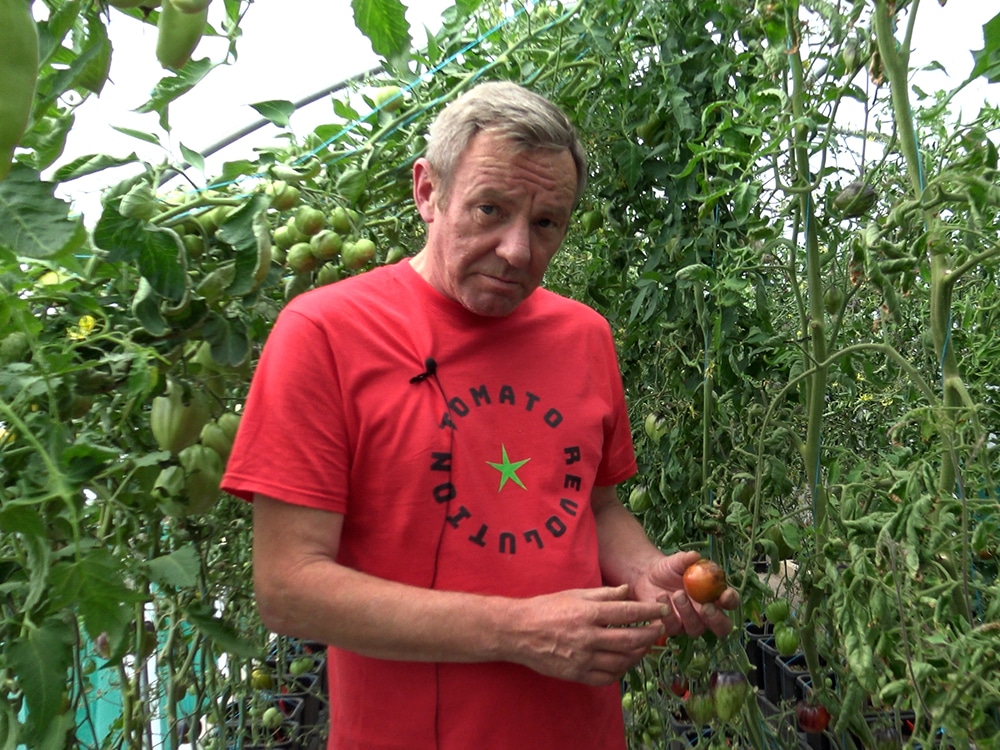
With so much great-looking fruit around, it’s always tempting to ask, ‘When is harvest time?’ For Lance, the key moment is the ‘breaker’ stage. ‘We find that is the best time to pick a tomato, the fruit is showing some colour but is still quite firm and a little underripe, we’ll pick it at that point and keep it for two or three days, it’s perfect to eat then.’
Bringing It All Together
Without wanting to imply god-like omnipotence (!), Lance’s AutoPot Watering System has a hand in pretty much everything we’ve talked about here.
Lance has chosen a setup comprised of easy2grow modules. These feature an incredibly space-efficient design – allowing him to fit as many plants as is healthy into the polytunnel.
As with all AutoPot Watering Systems, the rate of irrigation in the Easy2Grow is controlled by the plants themselves. This means Lance can grow 120+ varieties within a single system, safe in the knowledge that each plant can draw what it needs, when it needs it.
Getting the level of irrigation precisely right for every plant has been a game-changer for Lance, as he says, ‘since we started with AutoPot, one of the main benefits is that we get no more Blossom End Rot on the plants. Blossom End Rot normally comes about due to inconsistencies in watering, and you don’t get that with AutoPot. The plants take exactly the right amount of water and the right amount of nutrients that they want – it’s 100% on demand.’
As the pots are irrigated and fed from beneath, there is no water sitting on the topside of the grow media. Hence, the evaporation, humidity, and the need for ventilation are reduced. Obviously, there’s no need to hand-water the plants, so you are free to prune the lower reaches without fear of ‘splashback’ infecting any wounds.
Harvesting is somewhat more within your control, as you can closely monitor and adjust your fertiliser inputs. Better still, those fertilisers can be fed via the reservoir and pipework at all stages of growth, easing maintenance and affording more time for plant care.
All This Could Be Yours
It really could! Don’t forget that Lance is a seed breeder whose perfected varieties are readily available via his online store – so you too can revolutionise your crop. Thanks once again to Lance for letting us in – follow his crops and latest seed releases on Insta @tomatorevolutionseeds