


A world away from the soggy, slow, slog of 2024, this season has offered up sublime conditions for growers in the United Kingdom. Summer seemed to kick off in late March and ran all the way through to September. True, 2025’s superabundance of heat and light may have meant more management for plants attuned to a traditional ‘Great British Summer’. But at least there was a growth-stimulating climate to manage. And some varieties were living it up, plain and simple. Not least amongst the crops thriving in the dazzling dog days of ‘25 were chillies.
Given these exceptional circumstances, we felt duty-bound to reach out to a chilli grower and record their experiences for posterity. Who knows, a thousand years hence someone might dig up the internet and have this blog post as evidence (?) of climatically-charged capsicum cultivation in times gone by! Hello future world, you’re in for a treat!
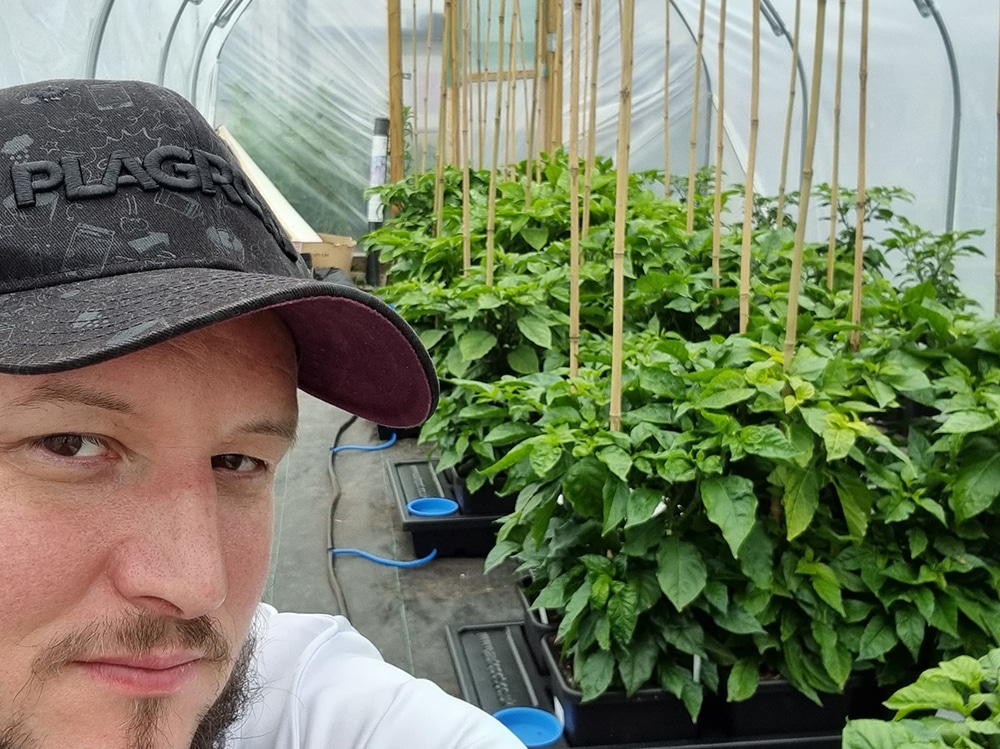
Who better as our putative historical artefact than Marc Elliott of Flavour Before Fire? As a smallholding farmer and artisan producer he straddles the worlds of food production and sale. His account speaks of everything from propagation choices to crop water consumption, from cultivation techniques to pest management, from harvesting to modern culinary tastes. Marc man, if this goes to plan you’re gonna be famous (at some point)! With that in mind, you best tell us where you’re growing and how you go about it, keep the interest going for the reader etc.
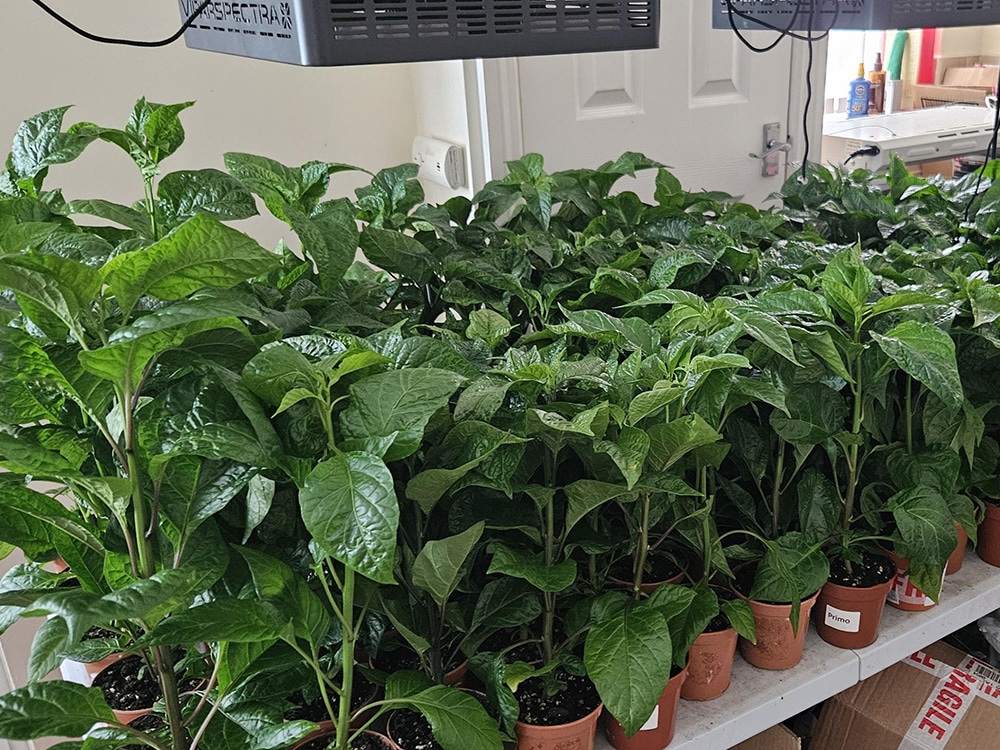
“Hey AutoPot, thanks for asking! I’m in North East England. And to get my seeds started, I use a pretty standard propagator/heat mat combo. As soon as the seedlings have surfaced, they’re potted on to 9cm pots in good quality compost and spend the next 10 weeks in those pots on a 1.5m long table under my LED grow lights.”
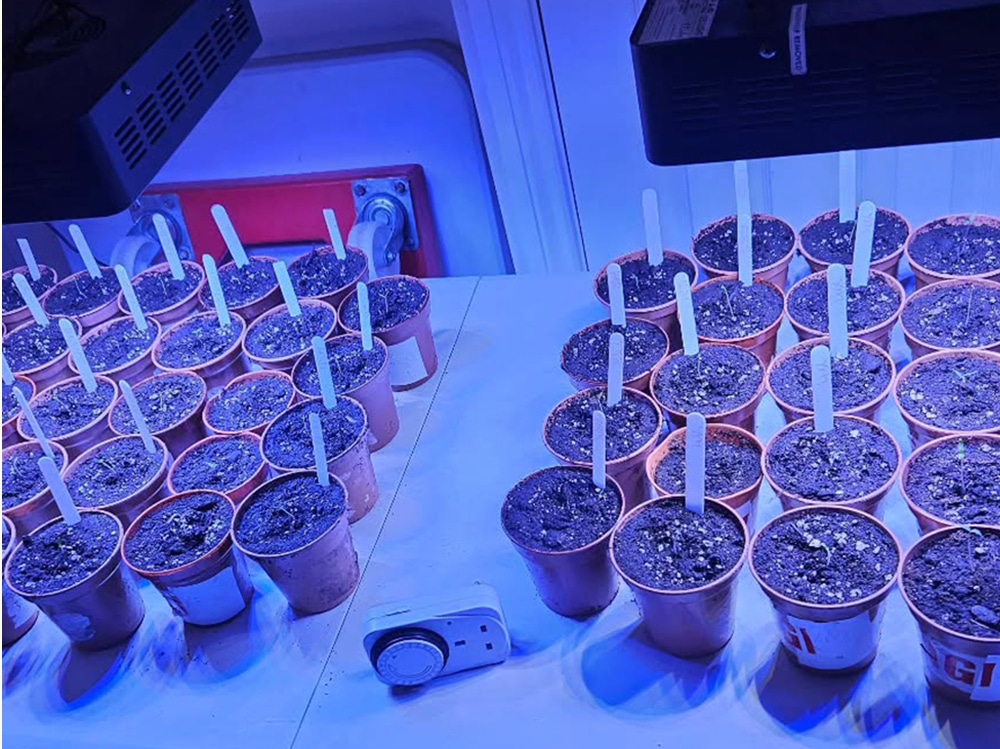
“Giving the plants a solid, strong start whilst indoors is so important in my opinion. Once the seedlings have been in their first pots for a few weeks, I start to hand feed them every Monday with a quality organic Nitrogen feed plus a little CalMag. The plants usually need about 100-150ml water a week initially. But as they start growing a second watering later in the week is often needed.”
Under normal circumstances the young plants would be going nowhere until late April. But given the way that spring panned out this year, Marc could afford to venture out with them earlier and pot-on into his excellent, allotment-based polytunnel cultivation setup.
This is where the plants remain for the rest of the season in Auto8 watering systems. “I pot the plants on using a good quality compost with 20% perlite added. Once in the poly, they initially get water only, as there’s enough nutrition in the compost to see them through that first 3-4 weeks. After that, I use a balanced hydroponic feed that covers all the main and micro nutrients.”
Like most growers, Marc is keen to maximise the space he has available and bring in the largest high-grade harvest possible. To these ends he usually aims for sixty four plants under cultivation per season. That’s quite a large number for two polytunnels that measure 40ft x 10ft and 20ft x 10ft respectively. However, thanks to the space-efficiency of Marc’s Auto8 systems he can easily achieve his desired plant density. Each Auto8 irrigates and feeds eight plants in a single unit using a single AQUAvalve, vastly reducing the physical footprint of each pot. And, when the plants get big, the Auto8s really come into their own.
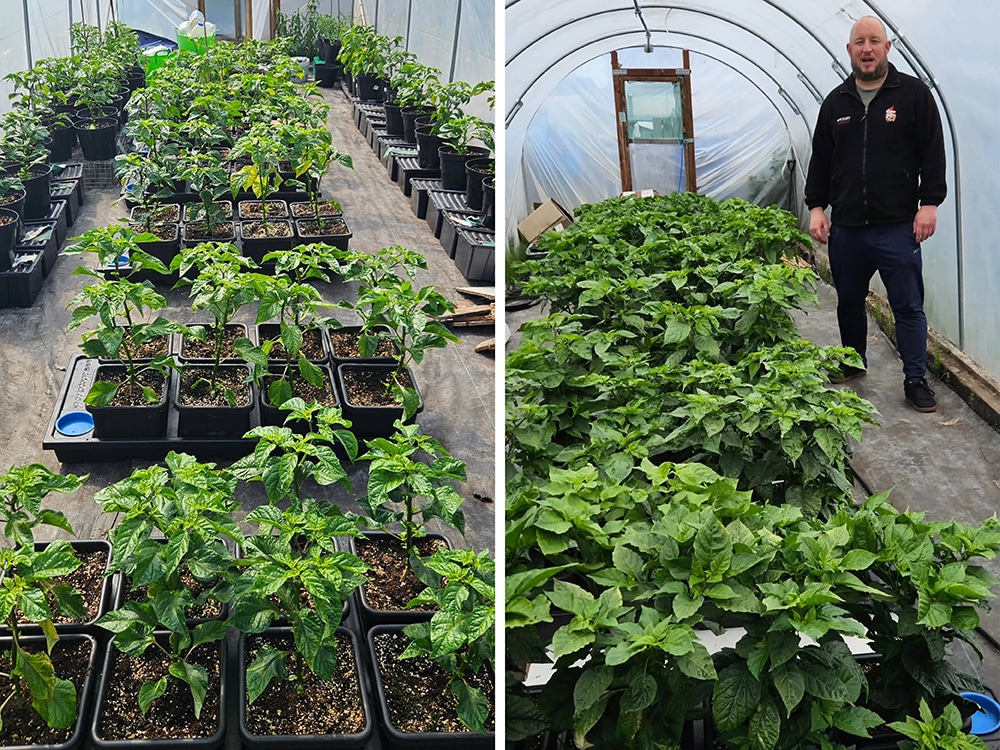
The plants in Marc’s polys can quickly take over all the available space, especially when driven by extended spells of hot, sunny weather. In such a tight spot, watering and feeding would be incredibly challenging if not for the Auto8’s automatically supplying irrigation and nutrients straight to the roots. Because there are no pumps or computers in an Auto8, and just a single AQUAvalve to occasionally monitor, maintenance access is not really an issue at all either.
It’s also worth remembering that Marc’s entire automated chilli growing operation is only possible because the systems run on gravity pressure alone. With no electricity or mains water required he’s free to grow ‘off-grid’ on the allotment. All he requires is a reservoir. In Marc’s case this reservoir is a 400L FlexiTank Pro. We were intrigued to find out just how much water his plants have been getting through this year.
“Normally, at the very start of the season, the reservoir will last a couple of weeks or so. Once the plants are well established/in the hotter months it tends to need refilling every 7 days on average. During a heatwave, I’ve seen it only last 6 days. In the colder autumn months, the when plants begin to slow down a bit the reservoir can take up to 2-3 weeks to empty, although I’m careful not to ever let it run completely dry.”
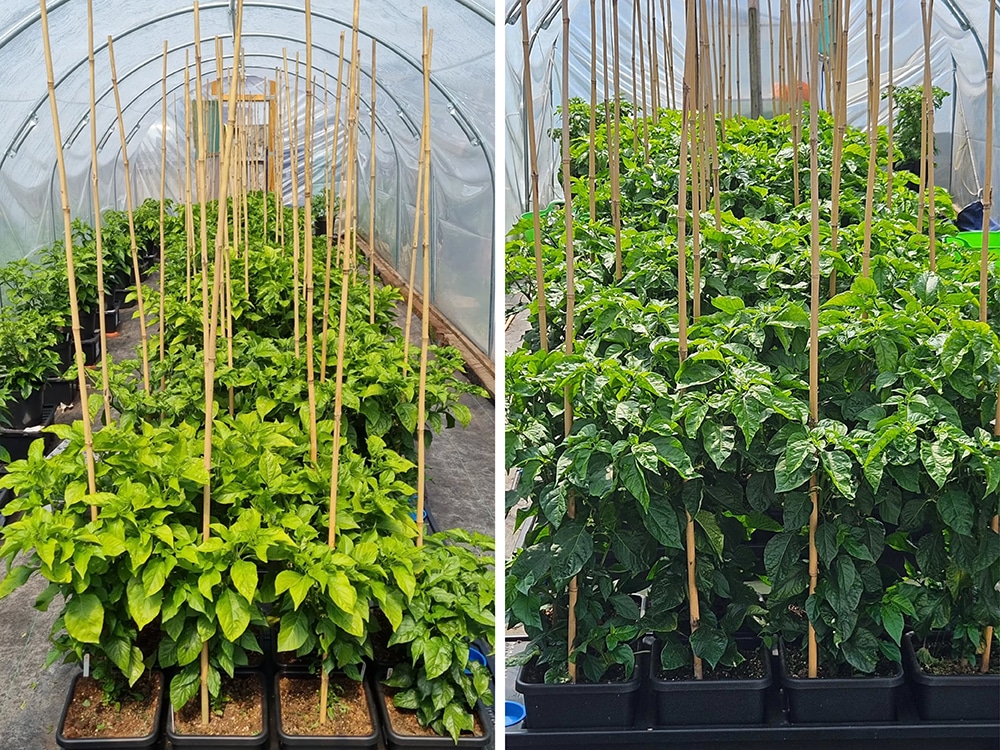
With so many plants in close proximity care needs to be taken when guiding growth, countering pests, and ensuring the harvest comes in safely. “As the plants begin to grow support becomes vital, so I use 6ft canes to support the main plant and loops of cable ties to support any individual and heavily laden branches.”
The density of plants and limited access means that pest control is a key consideration for Marc as any outbreak could spread quickly between plants. A particular issue in his poly based setup are aphids, and the ants that farm them.
“I do tend to get an ant outbreak in my big tunnel early season, so I lay a couple of ant traps and that usually gets rid of them within a week. Ants like to farm and protect aphids, as they like to eat the skins that aphids shed as they grow bigger, so it is important to deal with them quickly.”
“I get a burst of aphids at the start of the outdoor season, but never to the point of infestation. Once I start noticing them, I’ll introduce some ladybirds into the tunnels. These are often found on nettle patches and they (and their larvae!) love to devour aphids. Parasitic wasps also soon find their way in. Between the ladybirds and the wasps the issue is take care of naturally and without any need for pesticides.”
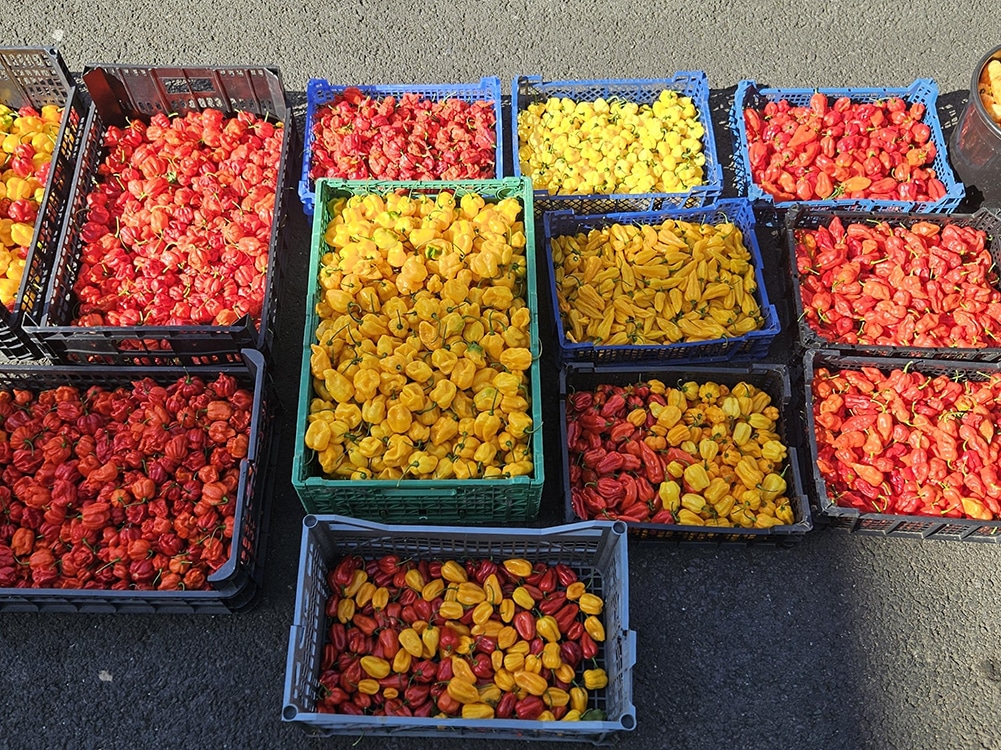
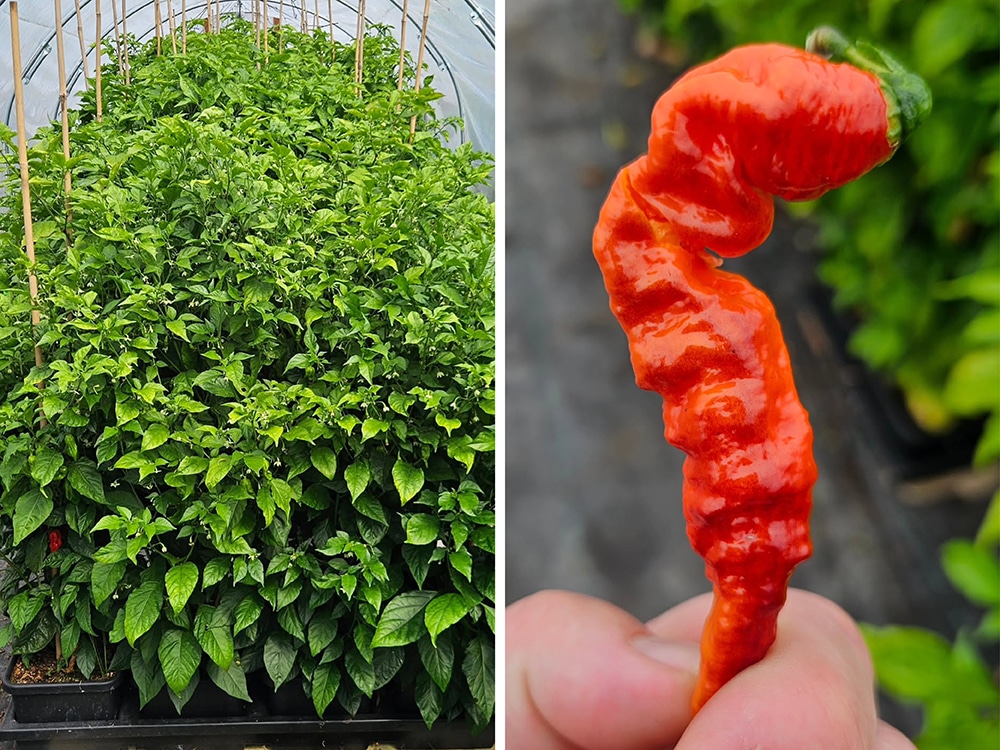
In order to maximise yield and ‘steer’ the plants Marc removes the small early wave of ripe chillies that appear around late July/early August. “I’ll pick any ripe ones at this point, as well as any that are 50% + ripe. This keeps the plants productive and (in my opinion) helps them focus their energy on the bigger, later waves.” This approach, together with the prevailing conditions, cultivation technique, system choice, and nutrient regime certainly seems to be reaping rewards.
“It has been great for yield and definitely a record breaker for my setup. As I write this, it is late September and I’ve had two big harvests already, but I picked my third and biggest harvest to date at the start of this week. I’ve yet to weigh them, but there’s over 50kg easy! There is still a ton of chillies left to ripen as well. It has definitely set a new bar!” That’s a lot of chillies, so it’s just as well that Marc’s got a use for them.
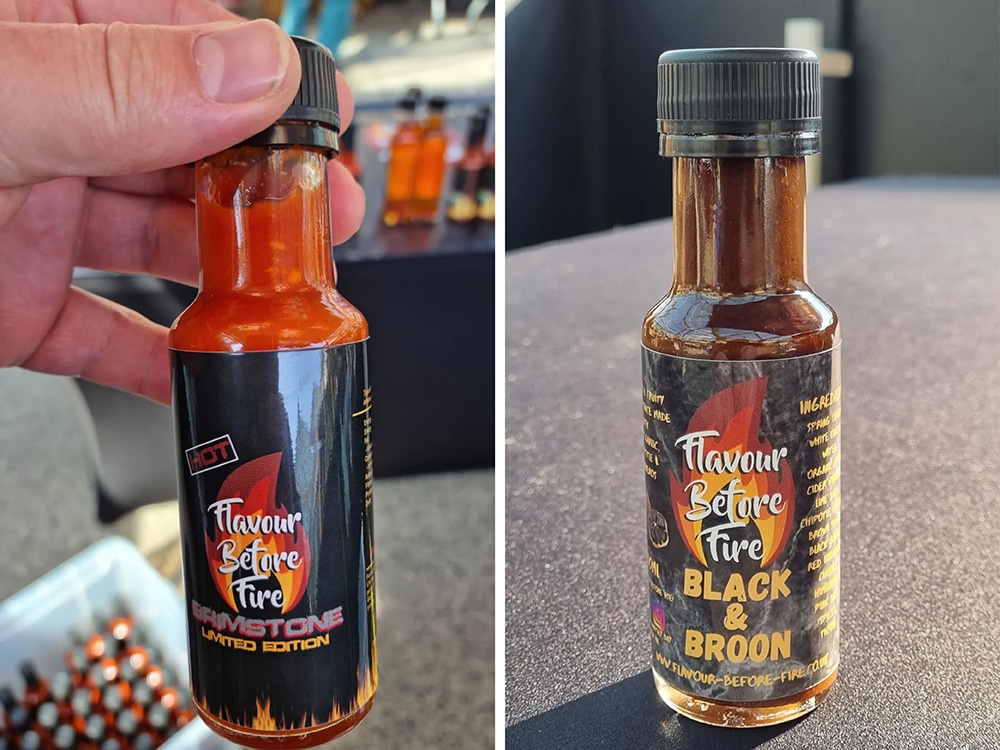
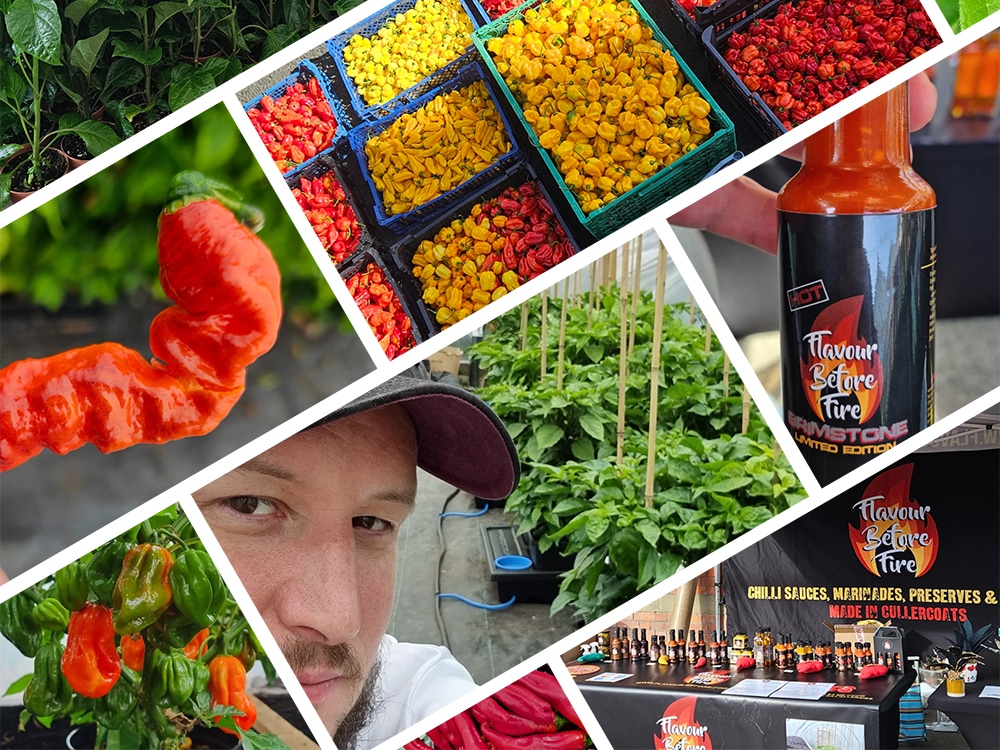
Anyone for a ‘fiery and fruity brown sauce made with spring onions, white onions, organic apple cider vinegar, lime juice, chipotle chillies, habanero chillies, black garlic, brown sugar, selected spices, Himalayan pink salt and thyme?’
Or maybe FBF’s spiciest sauce to date, jam-packed ‘with 60% of the worlds hottest chillies, including Carolina Reapers, Trinidad Scorpions and Primotallis, a deliciously complex base plus a proprietary blend of super-hot chilli powder?’ Given the number and popularity of Marc’s superbly flavoursome concoctions it’s small wonder that his heavy harvests will be very much in demand.
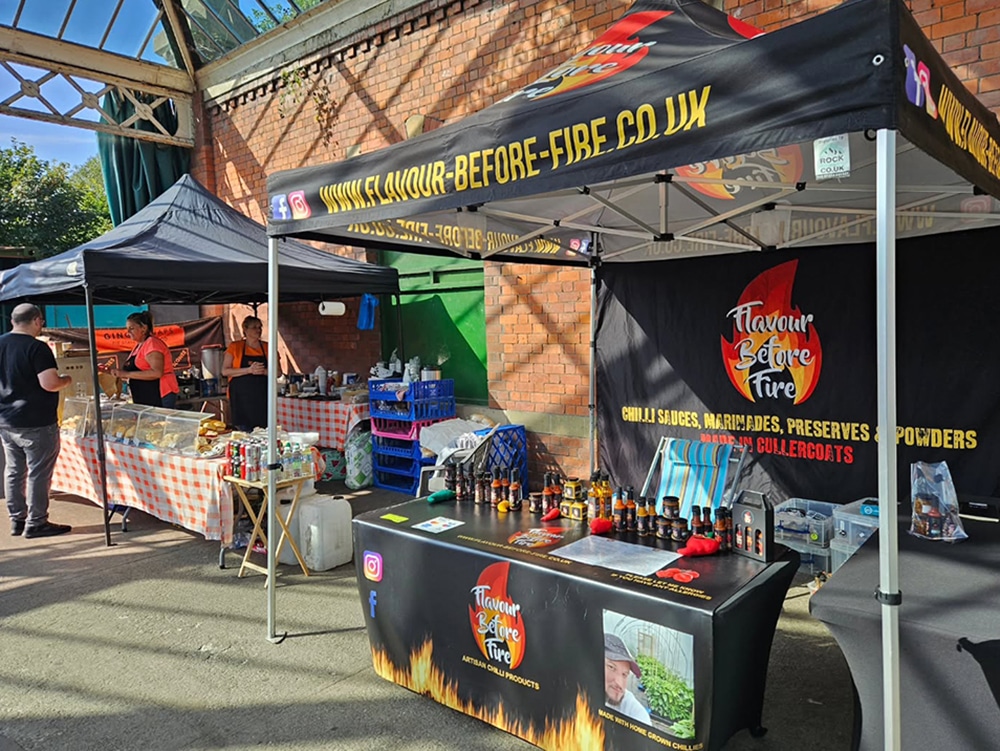
Chilli sauce production has become a ferociously popular hobby-industry so it’s important to have something that sets a brand apart. As Marc says, “for me it’s about making sure that the flavour is always there, which is definitely the most important thing. It’s also a good selling point that my products are made with my own chillies!”
Marc likes to maintain a real life presence at a large number of markets and events across the North East where you catch up with him and get your hands on his wares. Chief amongst these locations is Tynemouth Market, “I’ll always have a soft spot for the place as its my local and main pitch. I love being over in South Shields for the Great North Feast during summer too. It’s always well attended and I love trying all the different street foods over the course of the weekend!”
If you’re not of the Tyneside / Northumbrian persuasion you can always pick up a bottle online here and follow Marc’s latest developments @flavourbeforefire. Our profuse thanks to Marc for his time and information, congratulations on an excellent season!